Overview
What DolphinRadar is, in one screen
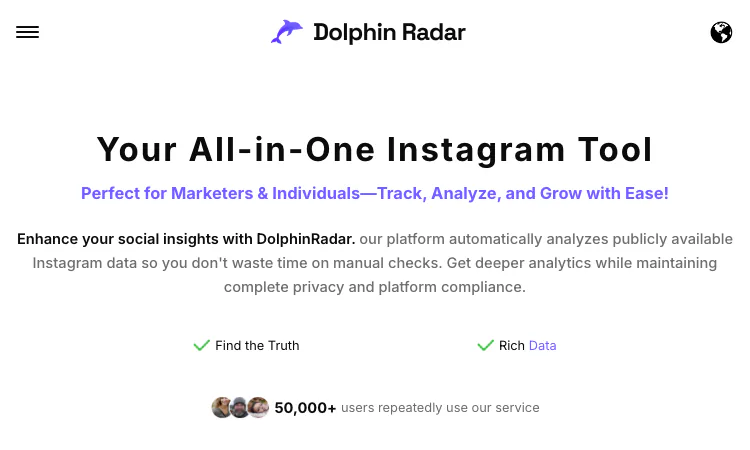
Most Instagram tools pick a loud lane. They schedule posts, or they edit photos, or they sell engagement. DolphinRadar picked a quieter lane: DolphinRadar watches what public accounts do and writes the activity down.
Concretely, DolphinRadar is a tracking and analysis service for publicly available Instagram activity. You hand DolphinRadar a username, and the service collects the public record of that account's behavior — photos liked, accounts followed, unfollows, the accounts it interacts with most, the tags that keep reappearing — then formats the material into a dated report. The site calls DolphinRadar an all-in-one Instagram tracker and analyzer, and the label fits what the product actually does.
This profile covers what DolphinRadar is, who it serves, what a subscription includes, and where the edges of the service sit. Nothing below goes beyond what the DolphinRadar site states or what follows directly from those statements.
The problem it starts from
Instagram renders activity in a feed that erases itself. An account likes forty photos on Tuesday, and by Wednesday there is nowhere to review that. If you run influencer campaigns, watch a competitor, or research how one account behaves across a month, the platform hands you no ledger.
The manual workaround is familiar. You scroll, you screenshot, you paste into a spreadsheet, and you repeat tomorrow. That routine survives one account for one week. The routine collapses the moment you need thirty days of history or a second subject.
DolphinRadar exists to delete that spreadsheet. The service states plainly that DolphinRadar automatically analyzes publicly available Instagram data so users do not waste time on manual checks. Every promise DolphinRadar makes hangs off that one sentence, so it is the right place to start judging the product.
How the core tracking works
The workflow DolphinRadar describes is three steps, and it deserves to be taken literally.
First, you create a DolphinRadar account. Second, you add the username of the public account you want tracked. Third, you wait: DolphinRadar calls this the detection period, the stretch during which the service collects the account's public activity before the first report unlocks.
When the detection period ends, the report lands in your DolphinRadar dashboard. A DolphinRadar report lists which photos the account liked, recent follows and unfollows, top interactions, and trending content tags, all drawn from public data. Reports keep arriving periodically for as long as the subscription runs, so a DolphinRadar report series builds a picture over weeks instead of resetting each morning.
One rule matters before you pay: every DolphinRadar plan tracks exactly one Instagram account. A second subject means a second subscription. The DolphinRadar plan page FAQ states this directly, and it is the kind of constraint better known in advance than discovered after checkout.
Around this paid core, DolphinRadar keeps a shelf of lighter utilities — a story viewer, a post viewer, a downloader, a hashtag generator, an IG shadowban checker, unfollower and recent-follower trackers, a follower export tool, and a mutual checker. None of these requires a subscription. The utilities handle the one-off jobs, the DolphinRadar reports handle the continuous ones, and both layers draw on the same public-data foundation, which keeps the product narrow in a healthy way.
Two audiences, one report format
DolphinRadar splits its own homepage into two audiences, and the split is honest about who actually buys.
The first audience is marketers. For them, DolphinRadar frames the same reports as campaign intelligence: which accounts an influencer genuinely engages with, which tags an audience cluster drifts toward, how a competitor's following shifts after a launch. DolphinRadar also offers influencer discovery, with real-time data on more than ten thousand influencers, and the site names competitor monitoring as an explicit use case.
The second audience is individuals. Here the DolphinRadar site is blunter: celebrity gossip, following the public activity of a specific account such as a partner's, and browsing anonymously. Whether watching one person's public likes is appropriate depends on the situation and the relationship; the boundary DolphinRadar draws is that the service reads only data Instagram already shows the world. DolphinRadar never logs into the tracked account and never unlocks private material.
Both audiences receive the same artifact from DolphinRadar: a dated report of public behavior that reads in a few minutes.
What a subscription buys
DolphinRadar sells subscriptions rather than one-off reports. The DolphinRadar plan page offers monthly, quarterly, and annual billing, with prices rendered dynamically at checkout instead of printed statically on the page.
The tiers differ in substance, not just length. AI Insights — the DolphinRadar layer that interprets tracked activity into persona-style sketches — ships with quarterly and annual plans only; the monthly DolphinRadar plan excludes it. Quarterly subscribers get four AI Insights modules, annual subscribers get nine. Quarterly and annual DolphinRadar plans also include a limited-time complimentary trial of Stories and Highlights tracking, with the trial length confirmed by email.
Other features referenced on the site include historical posts, a top commenters insight, CSV report downloads, periodic reports, and a cross-platform search that checks a suspicious account against Twitter, LinkedIn, Pinterest, TikTok, and Snapchat. Payment runs through Stripe, DolphinRadar does not store card data, and cancellation inside the DolphinRadar dashboard stops billing at the next cycle.
For context on scale, the site cites more than fifty thousand repeat users of DolphinRadar — a self-reported figure best read as traction rather than audit. What a new subscriber can verify directly is the cycle itself: register, add one username, wait through the detection period, read the first report. That cycle is short enough for the fit between product and need to become obvious inside the first billing period, which is the practical test that matters for a subscription tool of this kind.
An honest closing read
DolphinRadar does not unlock anything hidden. The value is aggregation: the same public signals you could collect by hand, collected on a schedule by DolphinRadar and formatted into reports. Judged against that promise, DolphinRadar is coherent — a defined input, a defined waiting period, a defined output, and a clear one-account rule.
Treat the interpretive claims with more care than the structural ones. AI Insights sketches produced by DolphinRadar are inferences from likes and follows, not diagnoses, and the compliance language on the DolphinRadar site is its own marketing rather than an audit. The structural claims hold up better: public data only, one tracked account per plan, cancellation anytime. If a readable ledger of one account's public Instagram activity is what you need, DolphinRadar delivers exactly that, and DolphinRadar does not pretend to deliver more.
One closing note on expectations. Every DolphinRadar report describes the public self of an account, and a public self is curated by its owner. That does not make the data useless — consistent public behavior is still behavior — but it caps what any report can honestly claim to reveal. The right mental model is a clipping service with a memory: DolphinRadar watches what the platform already shows everyone, remembers what the platform forgets, and stops there.
Related apps
Portkey
Portkey — one AI Gateway to 1,600+ LLMs with caching, routing, and fallbacks for production-ready apps.
Portkey Portkey is an AI Gateway that gives teams unified access to more than 1,600 large language models through a single API. Instead of writing and maintaining bespoke…
Explore App
Decision API
Decision API – Official Website, What It Is & How to Use
Decision API is a developer platform that aggregates decision AI models — Jev, Laya, Kev, Solar Decide, Span, Liquid, D1 and more — behind one playground and one unified API for…
Explore App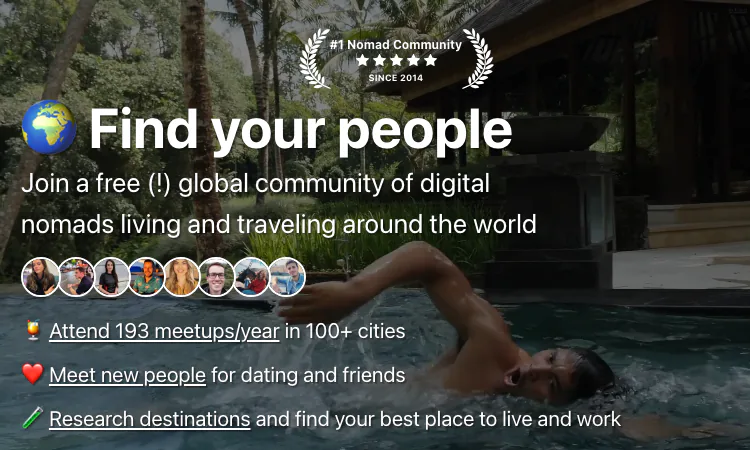
Nomads.com
Nomads.com ranks 1,500+ cities for remote workers by cost, internet, air quality and safety, with a free nomad community built around its data.
What Nomads.com actually is Nomads.com is a website that ranks the best places in the world to live and work remotely. It was originally called Nomad List, launched in 2014, and…
Explore App
Tavily
Tavily gives AI agents one API for real-time web search, extract, crawl, map, and deep research, returning cleaned and cited content that is ready for prompts.
Tavily, Explained: A Web Access Layer for AI Agents Ask a language model what happened in the news this morning and you get one of two answers: a polite refusal, or a confident…
Explore App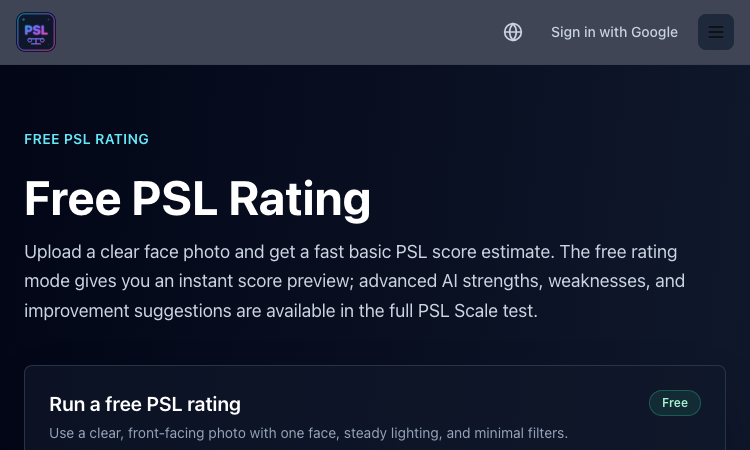
Free PSL Rating
Free PSL Rating scores your face photo on the PSL attractiveness scale with no login required.
Free PSL Rating Free PSL Rating is a no-login web tool that analyzes a single uploaded face photo and returns a quick attractiveness estimate on the PSL scale, the internet…
Explore App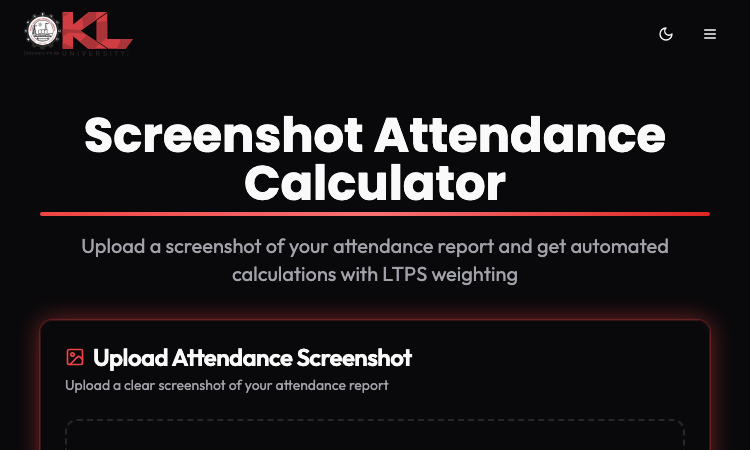
Kl Calculator
Kl Calculator — upload your attendance screenshot, extract subjects with OCR, and check KL University exam eligibility.
Kl Calculator Kl Calculator is the fastest way for KL University students to check their attendance percentage and exam eligibility. Every KL University student knows the ritual:…
Explore App