Overview
A card game where the encyclopedia is the deck
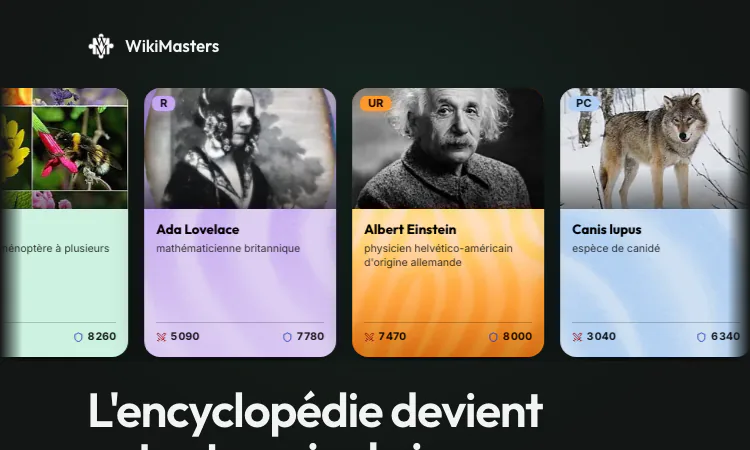
Most collectible card games invent their own universe. WikiMasters does the opposite: it borrows the largest one already written. Every card in WikiMasters comes from a real Wikipedia article, and the article's own data decides how strong the card is. The bee, the Great Wall of China, Ada Lovelace and the planet Saturn all exist as cards, each one carrying a short description lifted from its source article.
The premise is stated plainly on the homepage: the encyclopedia becomes your playground. This profile looks at what WikiMasters actually offers, how the cards are built, and who WikiMasters fits.
What WikiMasters actually is
WikiMasters is a free-to-join collectible card game, presented in French and run by Shoobidoo Labs inc. Signing up takes a username, an email address and a password, and WikiMasters asks you to confirm that you are at least 18 years old. Registration itself is free, and WikiMasters is built around opening packs of cards, completing an album, duelling friends, trading duplicates and joining guilds.
The source material is Wikipedia. WikiMasters states clearly that the encyclopedic content of the cards comes from Wikipedia and remains under its original CC BY-SA licence. WikiMasters also states that it is not affiliated with the Wikimedia Foundation, which is the kind of disclosure worth repeating: this is a game built on open content, not an official Wikimedia product.
That origin shapes the whole experience. A card in WikiMasters is not an invented dragon or an anonymous warrior. It is Albert Einstein, Frida Kahlo, Machu Picchu or the Titanic, with a one-line description of who or what it is. Playing WikiMasters means handling small pieces of general knowledge, and WikiMasters leans into that rather than hiding it.
How article data becomes card stats
Here is the mechanic that makes WikiMasters different from a normal trivia skin. Each card carries two numbers and a rarity tier. Those values are not designed by hand; they are derived from the article itself.
The mapping, as WikiMasters describes it, works on three signals:
- Rarity comes from how much the article is read. Popular topics produce rarer cards.
- Attack comes from the length of the article. Longer articles hit harder.
- Defense comes from the quality of the article. Better-written articles absorb more.
You can see the pattern in the examples shown on the homepage. The Sun, an enormous article, appears as an L-tier card with 9,470 attack and 5,420 defense. The Great Wall of China, also legendary tier, shows 8,970 attack. A bee, a comparatively short article, appears as a common C-tier card at 2,070 attack but a healthy 8,260 defense. WikiMasters cards sit on a six-tier ladder shown as C, PC, R, SR, UR and L, so the gap between opening a common and opening a legendary is real.
The effect is subtle and clever. Reading habits of the public, the diligence of Wikipedia editors and the sheer size of a topic together decide the meta of WikiMasters. A card is strong because the world cared enough to write thousands of words about it.
Packs, albums and the collecting loop
The core loop of WikiMasters is familiar to anyone who has collected cards in any form, physical or digital. You open packs, and each pack draws random articles that become cards. WikiMasters describes it simply: articles are drawn at random, and the more an article is read, the rarer the card that comes out of it.
The WikiMasters album is where the collection lives. It lets you sort your cards by tags such as Sciences and History, pin your favourites, and see which cards you are still missing. There is also a view for cards marked as available to trade, which feeds directly into the social side of WikiMasters.
Duplicates are not waste in this design. They are inventory. Every extra copy of Cleopatra VII or Nikola Tesla becomes something you can negotiate with, which keeps pack openings interesting even when the card is one you already own.
Duels, trading, auctions and guilds
The social layer of WikiMasters is where a solo collection becomes a game against people.
Dueling works as a quiz built from your own cards, as WikiMasters describes it. Attack scores, defense absorbs. Because the questions are drawn from the cards actually in your collection, building your album and building your duel strength are the same activity in WikiMasters.
Trading is direct. You propose your duplicates against the cards you are missing and negotiate in the open. The homepage even stages the conversation: one player asks whether you have a double of Cleopatra VII, the other answers yes, and asks for a Marie Curie in exchange. Deal concluded.
Auctions add a market rhythm. A card goes up for sale with a countdown, and players bid before time runs out. WikiMasters shows a live example: a running auction with a current bid, seven offers and a timer just over two hours from closing. Watching the clock and judging the price is its own small skill.
Guilds and rankings close the loop. You can join a guild, chat with its members and climb a team ranking; the homepage shows a guild called Les Encyclopedistes with twelve members. On top of that sit achievements, a general leaderboard and regular contests, so competitive players in WikiMasters have more than one ladder to climb. There is also a friends list with messaging, so a trade or a duel can start inside a conversation.
Who WikiMasters suits
The honest answer: adults who like both card games and general knowledge. WikiMasters will appeal to the collector who wants a structured way to accumulate and organise things, the quiz player who enjoys testing what they know, and the social trader who likes negotiating. Guild chat and leaderboards cover the team-oriented player.
It helps to read French, since WikiMasters and its card descriptions are presented in French. The content comes straight from Wikipedia, so the range of topics is enormous: science, history, monuments, animals, art, famous lives. If your reference point for a card game theme is mythology or fantasy, WikiMasters replaces it with the real world and its measurable popularity.
Two practical notes before joining. First, WikiMasters is strictly 18 and over at registration. Second, because cards are generated from real articles, WikiMasters warns that they can include sensitive content; you acknowledge this explicitly when creating the account.
One structural note: everything in WikiMasters connects. Packs feed the album, the album arms the duels, duels move the leaderboard, duplicates fund the trades, and trades fill the album again. A new WikiMasters player can enter this loop anywhere and the rest follows. That circular design is why WikiMasters works in short sessions: there is always one small move worth making, and every small move inside WikiMasters improves your standing in two or three WikiMasters systems at once.
Worth a look if you collect
WikiMasters takes open encyclopedic content and gives it a game shape: packs to open, an album to complete, duels to win, a market to work. The card stats derived from article traffic, length and quality give the WikiMasters collection a logic you can reason about, and the trading, auction and guild systems give it a social life.
It is free to create an account, the content licence is respected and stated, and the source is credited honestly. For a collector who wants substance behind the rarity tiers, WikiMasters is a grounded take on the genre: the encyclopedia as a deck, one article at a time.
Related apps

anugrahbodi github io
anugrahbodi github io Fun fake SNBP university admission result generator — buat lolos SNBP iseng-iseng
SNBP Generator 2026 adalah tool iseng-generator hasil kelulusan SNBP secara fun/humor. Masukkan nama, NISN, universitas tujuan, dan generate sertifikat kelulusan palsu untuk…
Explore App
TonoCuerdas
Classical violin, tailored lessons, automatic sheet music, and event performances.
Tonos Cuerdas: Learn, listen, and book—personalized violin lessons, classical music, modern covers and unique events at Tonos Cuerdas.
Explore App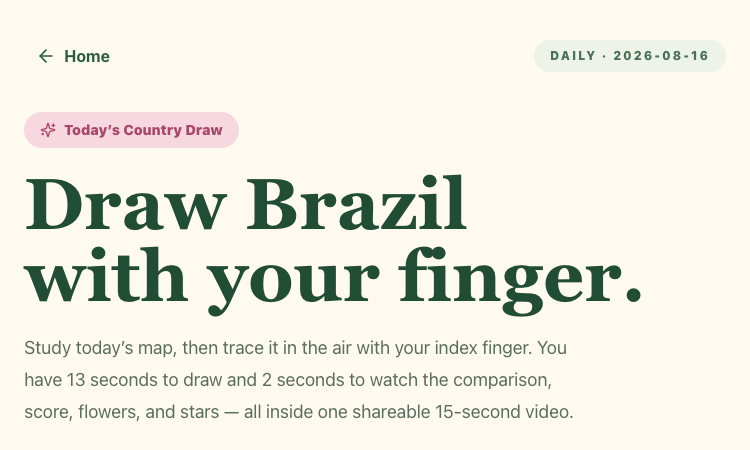
Country Draw Vercel App
Country Draw Vercel App — study a country map, trace it in the air, and share your 15-second score video.
Country Draw Vercel App Country Draw Vercel App is a daily challenge where you draw a country's map in the air with your finger — and your camera scores you. It is part geography…
Explore App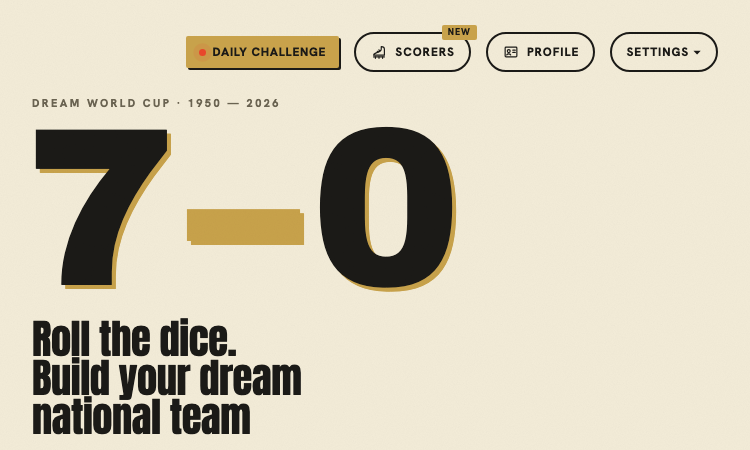
Sete a Zero
Sete a Zero - A daily dice-roll game where you build dream XIs from real World Cup history.
Sete a Zero Sete a Zero reimagines the classic bar debate about World Cup dream teams as a quick daily game. Open the site, roll the dice, and you receive a national team paired…
Explore App
Poople
Master the daily word ladder: change one letter at a time to reach POOP in this free, quick, and addictive puzzle.
Poople is the ultimate daily word ladder game designed for quick, clever brain-teasers that fit perfectly into your busy schedule. Your goal is simple: transform a starting…
Explore App
Dualshock Tools Github IO
Dualshock Tools Github IO- a browser-based PlayStation controller calibration tool powered by WebHID.
Dualshock Tools Github IO Dualshock Tools Github IO is a tidy browser utility that brings PlayStation controller calibration to a single web page. By using the WebHID interface…
Explore App